Smartphone Stories: Experiences of Blind and Low Vision Older Adults in Acquiring a Smartphone
Research Paper
Winter - Spring 2023
Older adults experience challenges with adopting novel technology due to intrinsic and social factors. However, the mobile phone adoption experiences of blind and low vision (BLV) older adults have largely been unexplored. We shed light on the socio-technical aspects of mobile phone adoption based on deep qualitative interviews with five BLV adults aged 60 and above. We found that narratives of smartphone accessibility can be misleading, expert knowledge is needed although scarce, and although smartphones increase access to society, using a smartphone with accessibility features for BLV people can be isolating. We present design implications for smartphones in order to improve shared access to the phone environment and to support inclusion and independent learning following smartphone adoption.
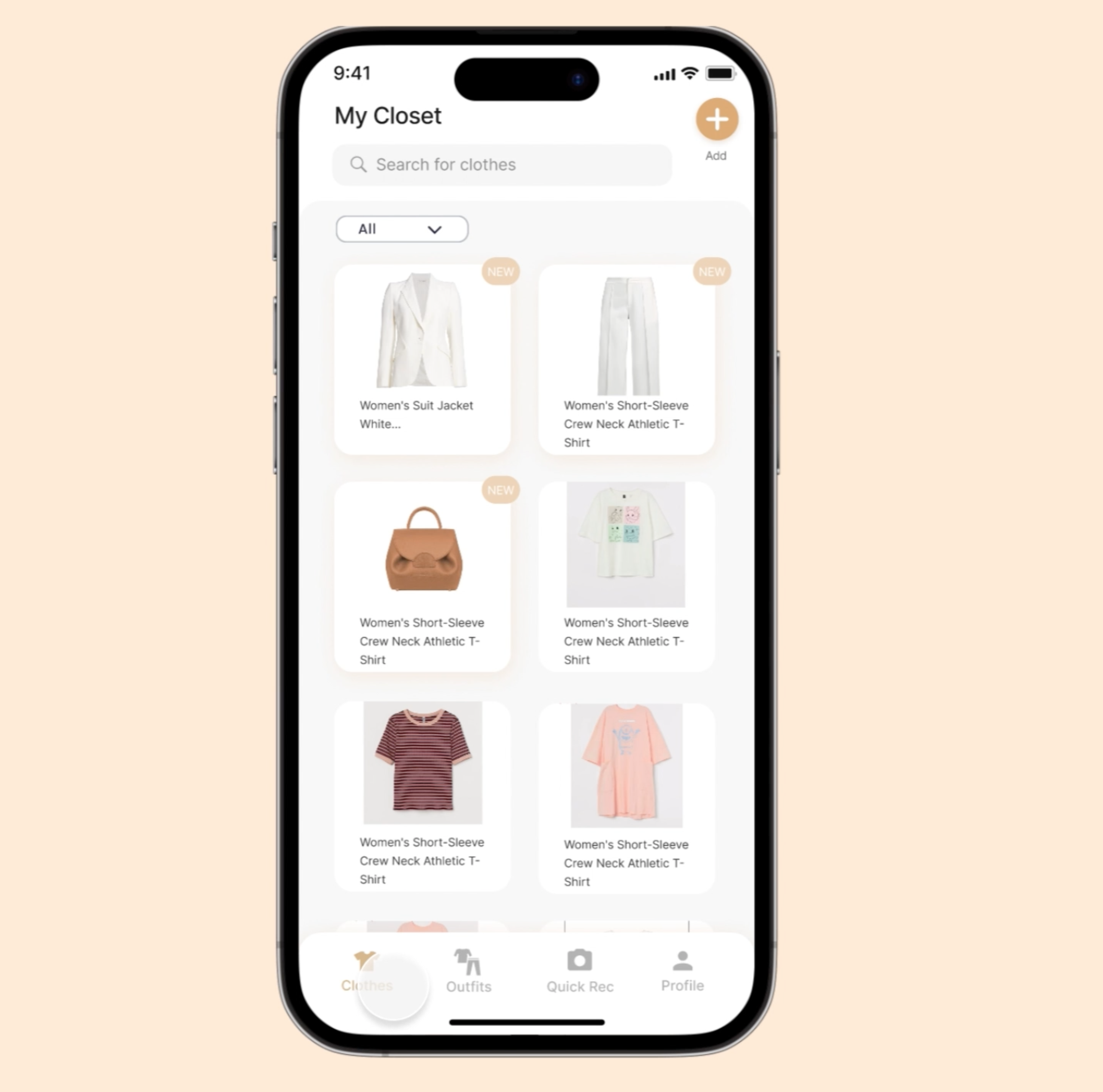
Case Study: My Personal Stylist
An Outfit Recommendation Assistant for Special Occasions
Fall 2022
My team and I designed and built a prototype to help people in choosing outfits! We followed the human centered design process to develop an application prototype in our graduate course Informatics 231: User Interface Evaluation & Design. We surveyed users to learn about their needs, and created low-, mid-, and high-fidelity prototypes, evaluating at each step. We built our prototypes in Figma.

Augmented Reality Patient-Specific Registration for Medical Visualization
Research Paper
2020 - 2022
Visualizing medical data such as organs is important in medical procedures such as needle biopsies. Typically, doctors use 2D CT scans and ultrasound to determine where to insert the needle. This paper presents an Augmented Reality (AR) visualization method that allows users to view a patient's organs directly on top of the patient virtually in AR.