Understanding How VLAN Trunks Work
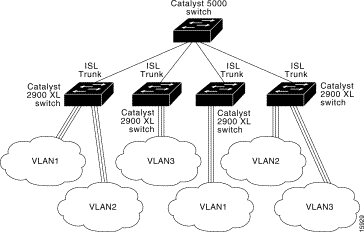
A trunk is a point-to-point link that transmits and receives traffic between switches or between switches and routers. Trunks carry the traffic of multiple VLANs and can extend VLANs across an entire network. 100BaseT and Gigabit Ethernet trunks use Cisco ISL or industry-standard IEEE 802.1Q to carry traffic for multiple VLANs over a single link.
Frames received from users in the administratively-defined VLANs are identified or tagged for transmission to other devices. Based on rules you define, a unique identifier (the tag) is inserted in each frame header before it is forwarded. The tag is examined and understood by each device before any broadcasts or transmission to other switches, routers, or end stations. When the frame reaches the last switch or router, the tag is removed before the frame is transmitted to the target end station.